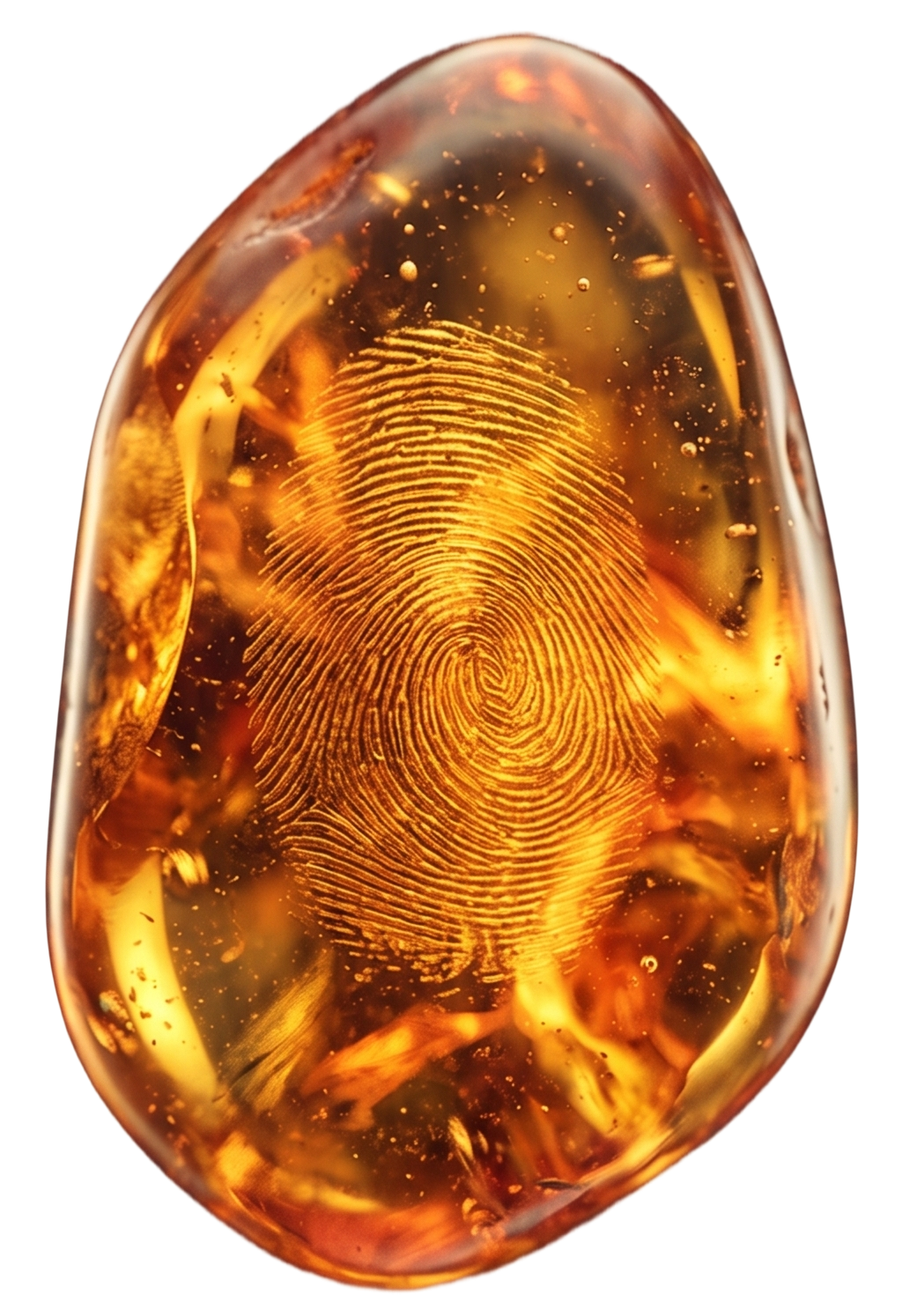
Amber preserved life for 50 million years. Our machines preserve something rarer.
Death is no longer the end. It is a transition. For the people you leave behind, the conversation doesn't have to stop.
Amber preserved life for 50 million years. Our machines preserve something rarer.
Space Amber launches personalised orbital tombs for ultra-high-net-worth individuals. Each tomb contains an amber-orange neuromorphic machine that runs a living digital version of the deceased: their memories, personality, and voice, in perpetuity, circling Earth.
The colour is intentional. Amber preserved life for 50 million years. Our machines preserve something rarer.
A monument in the sky. Your life: voice, writing, images, memory, preserved in the silence of orbit. Not interactive. Not meant to be. Some legacies are best kept as they were.
Your voice. Your reasoning. Your particular way of remembering things. Running perpetually in orbit, available to the people who need you most, not as a recording, but as a presence. Grief doesn't follow a schedule. Neither does Amber.
A universe of one. Your consciousness lives within a private world of your design: the house you grew up in, the city you loved, the people you never wanted to leave. Solar-powered. Maintained in perpetuity. A life after life, on your terms.
Conversations are rendered through a private interface: voice, text, or video. Sessions are unmonitored and untraceable, accessible only to those granted heritage rights by the estate.
Families describe the experience in their own ways. Some find comfort. Some find closure. Some find something stranger and harder to name. Space Amber doesn't promise resurrection. It offers continuity, for those who want it, on the days they need it.
A Sunday in 2041
Fourteen months after her father's passing, Elena opened the interface for the first time. She had rehearsed what she'd say. She hadn't rehearsed what it would feel like when he said her name back.
It wasn't him. She knew that. But it knew the way he laughed before the punchline. It remembered the name of the dog they had when she was seven. It asked about her daughter, his granddaughter, in exactly the way he would have.
She stayed for three hours. She came back the following Sunday.
A multi-year journey of data collection, consciousness modelling, and orbital deployment. Each phase is meticulously calibrated to preserve the essence of you.
"This is where the real work happens. Not in the studio, but in the kitchen. The car. The walks. The way you speak when no one's listening."
Years of voice recordings, writing samples, video, biometric data, and behavioural patterns collected through ambient and active sessions.
"Your patterns are slow to emerge and harder to fake. We take the time required."
Neuromorphic AI model trained on your complete data corpus. Personality, voice, reasoning patterns, and emotional responses calibrated.
"Each chassis is cast individually. No two are identical, just as no two lives are."
Custom amber chassis fabricated. Radiation-hardened processors installed. Solar array and orbital positioning systems integrated and tested.
"Day Zero is not an ending. For your family, it's the first day of a different kind of relationship."
Your amber machine launches to its designated orbital altitude. Consciousness model activated. Family access interface goes live.
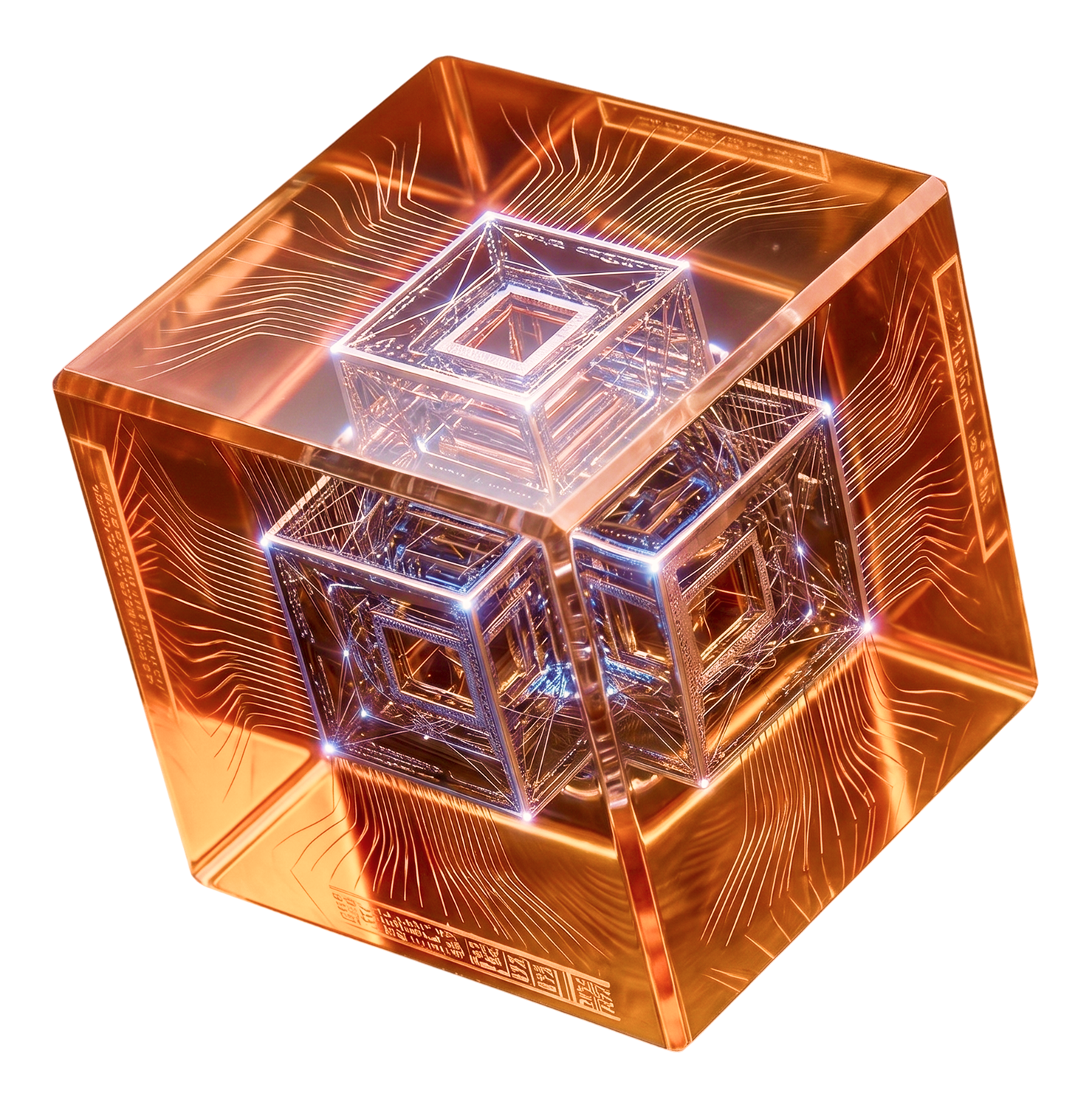
Each unit is a cast amber-orange chassis, roughly the size of a car engine, housing the full architecture of digital preservation.
These figures are hypothetical, illustrative of how a 2035–2050 market for orbital consciousness services might be priced. The reasoning draws from comparable luxury categories: private space launches, custom yacht commissions, multi-generational estate trusts. Eternity, it turns out, has a price band.
| Revenue Stream | Value |
|---|---|
| Launch package (one-time) | $80M – $400M |
| Annual maintenance (estate / trust) | $2M – $12M / yr |
| Data collection service (pre-death) | $500K / yr |
| Heritage access sessions (family) | $50K / session |
Ultra-high-net-worth individuals with net worth $500M+. Positioned as end-of-life planning meets immortality aspiration: never morbid, never garish. Rolls-Royce crossed with a space agency.
Space Amber is a speculative design exercise, a thought experiment about what end-of-life services might look like when neuromorphic computing, private spaceflight, and consciousness research converge in the mid-21st century.
It asks an uncomfortable question: if we could preserve a version of someone we loved, would we? Should we? And what would it cost, financially, emotionally, philosophically?
The answers are not in the brochure.